

Securing the right funding is one of the most critical decisions a business owner can make. With a complex financial landscape, understanding the different types of loans for business is the first step toward sustainable growth. Whether you're a self-employed professional seeking a low-doc solution, a property developer planning your next project, or a small business owner in Australia needing to purchase new equipment, the sheer number of options can feel overwhelming. This guide is designed to simplify the process by providing a clear, comprehensive breakdown of 10 key business financing solutions available in 2025.
We'll move beyond generic definitions to offer actionable insights into each funding type. You will learn the specific pros, cons, and ideal use cases for everything from traditional term loans and overdrafts to specialised options like construction finance, invoice financing, and credit-impaired solutions. This isn't just a list; it's a strategic roadmap to help you match the right financial product to your specific business needs, cash flow patterns, and long-term goals.
Our goal is to give you the clarity needed to make an informed choice that aligns perfectly with your commercial objectives. We will detail the typical features, eligibility requirements, and potential costs associated with each option, empowering you to navigate conversations with lenders confidently. By understanding the distinct advantages and potential pitfalls of the different types of loans for business, you can select the ideal financial tool to fuel your company's success. Let's navigate the options and find the perfect fit to drive your business forward.
1. Term Loans
Term loans are the quintessential business financing tool, offering a lump sum of capital that is paid back over a predetermined period with regular, fixed instalments. This predictability makes them one of the most popular and straightforward options among the different types of loans for business. They are ideal for significant, one-off investments that drive long-term growth.

Unlike a line of credit, which is revolving, a term loan provides the full amount upfront. Repayment schedules are typically structured with monthly or fortnightly payments over a term that can range from one to ten years, sometimes longer. These loans can be secured against a business asset (like property or equipment) or unsecured, though secured loans generally attract lower interest rates.
Who Are Term Loans Best For?
This type of loan is perfect for businesses with a clear, specific purpose for the funds. Think of a retail business needing a $75,000 injection to purchase seasonal stock in bulk or a small manufacturing firm securing a $150,000 loan to buy a new, more efficient piece of machinery. Professional service providers, like accountants or consultants, also use term loans to establish operational funds or finance an office fit-out.
Key Considerations for Applicants
Before applying, it's crucial to align the loan's purpose directly with your business growth strategy. Lenders will want to see a solid plan.
- Financial Documentation: Prepare comprehensive financial statements, including profit and loss reports, balance sheets, and cash flow projections. A detailed business plan is often required.
- Rate Selection: You can choose between a fixed interest rate, which provides certainty by locking in your repayment amount for the entire term, or a variable interest rate, which fluctuates with the market.
- Loan Amount: Be realistic about how much you need. Over-borrowing can strain cash flow, while under-borrowing may not achieve your objective.
- Security: Decide if you are willing and able to offer an asset as security to potentially access a larger loan amount or a better interest rate.
Diamond Lending Insight: For self-employed business owners, demonstrating consistent income and a strong business plan is key. Our specialists can guide you through preparing the necessary documentation, even for low-doc scenarios, to strengthen your application.
At Diamond Lending, we help you compare options from a wide panel of lenders to find a term loan that fits your business goals. Use our borrowing power calculator to estimate a suitable loan amount and contact us to discuss your specific needs.
2. Low-Doc and No-Doc Business Loans
Low-doc (low-documentation) and no-doc loans are a lifeline for business owners who don't fit the traditional lending mould. This type of business financing is designed for self-employed individuals, freelancers, and small business operators who can't provide the extensive financial paperwork required for a standard loan. Instead, lenders use alternative methods to assess serviceability, making these among the most flexible types of loans for business.
Unlike a fully verified loan, which demands years of tax returns and financial statements, a low-doc loan might only require a self-certified income declaration and some supporting evidence like Business Activity Statements (BAS) or bank statements. A no-doc loan goes a step further, requiring even less paperwork, though it is less common and often comes with stricter conditions.
Who Are Low-Doc and No-Doc Business Loans Best For?
These loans are ideal for businesses with irregular income streams or those that are newly established. For instance, a freelance consultant might use a $40,000 low-doc loan to fund a marketing campaign, while a tradesperson could secure $65,000 to purchase a new ute and tools, using their bank statements to demonstrate consistent cash flow. Online retailers and contractors also benefit by showing strong transactional history instead of traditional profit and loss statements.
Key Considerations for Applicants
While the documentation is reduced, preparing what you do have is vital. A strong application hinges on proving your business is healthy and can service the debt.
- Bank Statements: Maintain at least 6 to 12 months of clean bank statements showing consistent business deposits and responsible financial management.
- Alternative Evidence: Prepare recent BAS, an accountant's letter, or evidence of ongoing contracts. Even if not fully assessed, these can strengthen your case.
- Interest Rates: Be aware that the reduced documentation often means a higher interest rate to offset the lender's perceived risk.
- Security: Offering an asset, like a commercial or residential property, as security can significantly improve your chances of approval and help secure a more favourable rate.
Diamond Lending Insight: The key to a successful low-doc application is a compelling narrative. We specialise in presenting your financial position clearly to our panel of non-traditional lenders, focusing on strengths like consistent turnover and a solid ABN history to secure approval.
At Diamond Lending, our expertise in specialised finance means we can navigate the complexities for you. For a deeper dive, you can learn more about how low-doc and no-doc loans empower freelancers and business owners. Contact us to find a solution tailored to your unique circumstances.
3. Commercial and Business Lines of Credit
A business line of credit is a flexible, revolving credit facility, offering on-demand access to funds up to a pre-approved limit. Unlike a term loan, you only draw what you need, when you need it, and you only pay interest on the outstanding balance. This makes it an exceptional tool among the different types of loans for business, especially for managing cash flow uncertainty.
This type of finance acts like a business credit card but often with a much higher limit and more favourable interest rates. As you repay the amount you've drawn, the funds become available for you to use again. This revolving nature makes it perfect for handling short-term operational costs, bridging gaps between invoice payments, or seizing unexpected opportunities without needing to apply for a new loan each time.
Who Are Commercial and Business Lines of Credit Best For?
This loan type is ideal for businesses with fluctuating cash flow or unpredictable expenses. For instance, a construction company might use a $200,000 line of credit to purchase materials between receiving milestone project payments. A retail business can use it to manage seasonal inventory demands, while a property developer might secure it to fund land acquisition costs before full project finance is arranged.
Key Considerations for Applicants
While flexible, a line of credit requires disciplined management to avoid accumulating unnecessary debt. Lenders will assess your business's ability to service the facility.
- Financial Documentation: Be prepared with up-to-date financials, including business activity statements (BAS), cash flow forecasts, and profit and loss statements. A clear outline of how you intend to use the facility is vital.
- Facility Fees: Compare fees carefully. Many lenders charge an annual or monthly fee for keeping the facility open, even if you don't use it.
- Repayment Discipline: Establish clear internal protocols for when to draw funds and prioritise repaying the balance as soon as your cash flow allows.
- Interest Calculation: Understand that interest is typically variable and calculated daily on the drawn amount, so frequent, small repayments can significantly reduce costs.
Diamond Lending Insight: A well-managed line of credit can improve your business's credit history. We often advise clients to secure a facility proactively, so it’s ready for emergencies, demonstrating financial foresight to lenders for future, larger loan applications.
At Diamond Lending, we can help you navigate the options to find a line of credit with competitive rates and flexible terms. Use our repayment calculator to project potential interest costs and contact us to discuss securing a facility that supports your operational needs.
4. Construction and Development Loans
Construction and development loans are specialised financing products designed to fund building projects from the ground up. Unlike a standard loan that provides a single lump sum, these funds are released in stages, known as 'progress payments', as specific construction milestones are met and verified. This structure minimises risk for lenders and ensures capital is aligned directly with project progress.
This type of business loan is crucial for property developers, builders, and investors undertaking new builds or significant renovations. The loan typically covers the cost of land (if not already owned) and the construction itself, with funds drawn down as work is completed, from pouring the foundation to final fit-out. Once construction is complete, the loan is often refinanced into a standard commercial or residential mortgage.
Who Are Construction and Development Loans Best For?
This financing is perfect for businesses and individuals engaged in property creation. A residential developer might use a $2 million construction loan to build a block of townhouses, drawing funds as each stage is approved. Similarly, a commercial enterprise could secure this type of loan to finance the construction of a new retail space or office building, while an investor might use it to build a new investment property to expand their portfolio.
Key Considerations for Applicants
Securing construction finance requires meticulous planning, as lenders scrutinise the project's viability and your ability to execute it.
- Project Documentation: Prepare a highly detailed project plan, including council-approved plans, a fixed-price building contract, and a comprehensive budget or cost estimate.
- Builder Credentials: Lenders will verify the credentials of your chosen builder, ensuring they are licensed, insured, and have a solid track record of completing similar projects.
- Contingency Funds: It is essential to have a contingency fund, typically 10-15% of the total construction cost, to cover unexpected expenses or delays.
- Progress Payments: Understand the lender's schedule for progress inspections and payments. Delays in completing a stage will delay the release of subsequent funds.
Diamond Lending Insight: For developers and builders, presenting a water-tight project plan is non-negotiable. Our specialists understand the intricacies of construction finance and can help you package your application to demonstrate project viability and mitigate lender risk, improving your chances of approval.
At Diamond Lending, we specialise in navigating the complexities of construction and development loans. We can connect you with lenders who understand the property development market. Contact us to discuss your project and get a tailored finance solution.
5. Asset Finance (Equipment and Vehicle Loans)
Asset finance is a specialised funding solution designed to help businesses acquire essential equipment, vehicles, and technology. With this type of loan, the asset being purchased serves as its own security, which often simplifies the approval process. It’s a powerful way to obtain mission-critical tools without draining your working capital on a large upfront purchase.
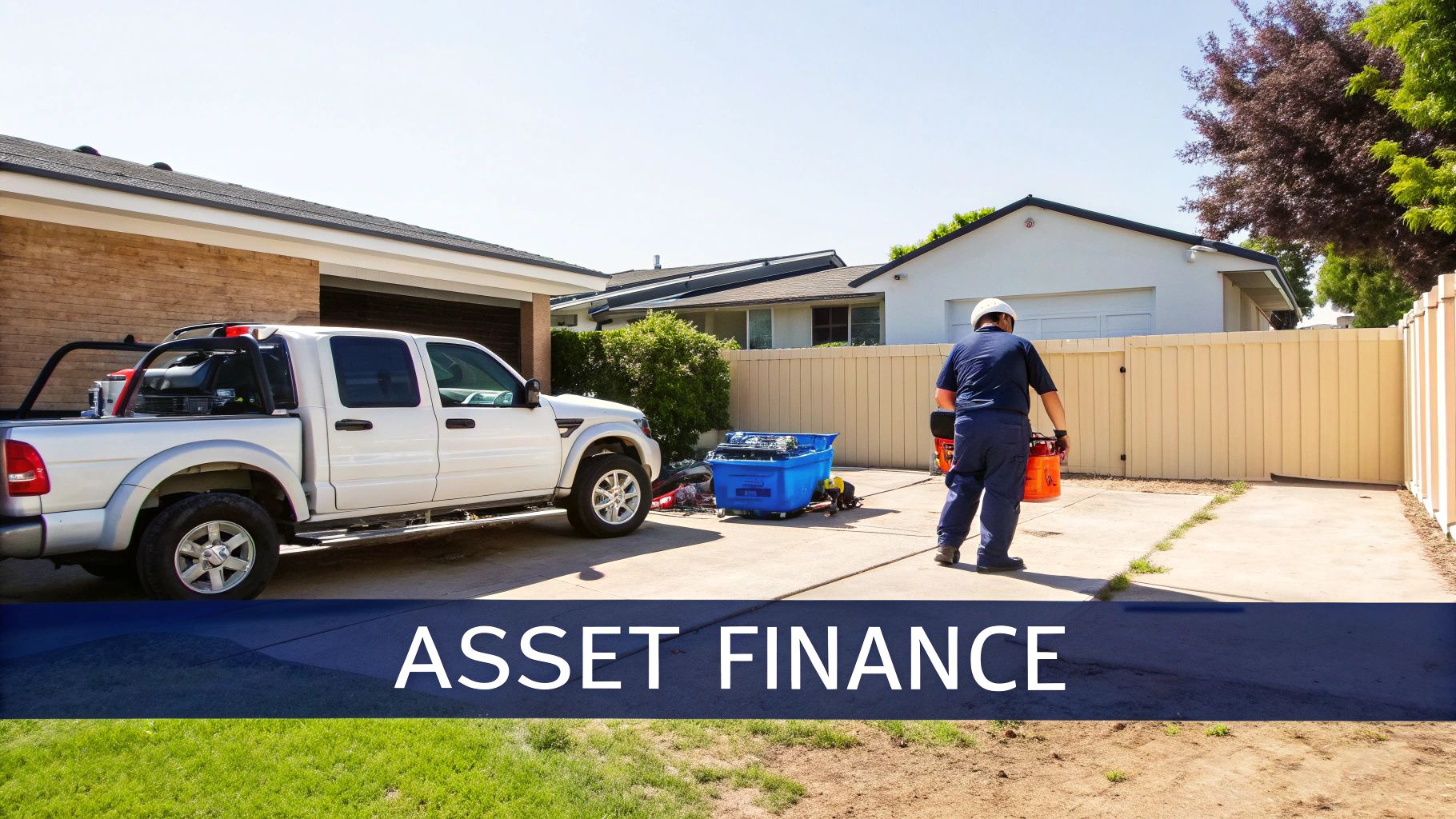
This financing structure preserves cash flow by spreading the cost of an asset over its useful economic life. Repayments are typically fixed and scheduled monthly, making them easy to budget for. Because the loan is secured by the asset itself, it’s often more accessible than other types of loans for business, particularly for those who may not have property to offer as collateral.
Who is Asset Finance Best For?
Asset finance is indispensable for businesses whose operations depend on specific physical items. For example, a plumbing business might finance a new work ute and jetter for $60,000, or a construction company could acquire a $120,000 excavator to take on larger projects. It is also common for professional services firms to finance IT equipment and office fit-outs, or for cafes to fund the purchase of commercial coffee machines and kitchen appliances.
Key Considerations for Applicants
Proper planning ensures your asset finance facility aligns with your business's financial health and operational needs.
- Loan Term vs. Asset Life: Align the loan term with the asset's realistic useful life. There’s no point paying for a vehicle for seven years if you plan to replace it in four.
- Asset Sourcing: Obtain competitive quotes for the asset you intend to purchase before finalising the finance. This ensures you're not overpaying for the equipment itself.
- Total Cost of Ownership: Remember to factor ongoing costs like insurance, registration, and maintenance into your budget when assessing affordability.
- Residual Value: Some asset finance structures include a residual value or balloon payment. A higher residual lowers your regular repayments but requires a lump sum payment at the end of the term.
Diamond Lending Insight: For self-employed tradies and contractors, asset finance is often the fastest path to upgrading your tools and vehicles. We can help you navigate chattel mortgages and hire purchase agreements, often with low-doc options, to secure the best rates and structure for your ABN.
At Diamond Lending, we compare asset finance options from a wide panel of lenders to find a solution that boosts your operational capacity. Contact us today to discuss how we can help you acquire the assets your business needs to grow.
6. Commercial Mortgages and Investment Property Loans
Commercial mortgages and investment property loans are long-term finance solutions secured against commercial or investment real estate. Designed for acquiring income-producing assets, they are a cornerstone among the different types of loans for business owners and property investors. This financing enables the purchase of everything from office buildings and retail shops to warehouses and apartment blocks.
Unlike standard business loans, these mortgages often feature longer terms, typically ranging from 15 to 30 years. The loan is secured directly by the property being purchased, which serves as collateral for the lender. Repayment structures and interest rates are tailored based on the property's potential rental income or business performance, as well as the borrower's financial standing.
Who Are Commercial Mortgages and Investment Property Loans Best For?
This type of loan is ideal for entrepreneurs and investors focused on building a property portfolio or securing a permanent location for their operations. For example, a doctor might secure a commercial mortgage to purchase the building for their clinic, or a property developer could use one to acquire land for a new subdivision project. It's also a common vehicle for those purchasing residential investment properties to generate rental income.
Key Considerations for Applicants
Securing a commercial property loan requires meticulous preparation, as lenders scrutinise both the borrower and the property itself.
- Property Viability: Lenders will assess the property's potential to generate income through rent or business operations. A professional property valuation and a clear financial forecast are essential.
- Deposit Requirements: A larger deposit is typically required compared to residential home loans, often 20-30% of the property's value.
- Documentation: Prepare detailed financial records, including business performance data, personal income statements, and projected rental yields for the property.
- Associated Costs: Remember to factor in additional costs such as stamp duty, legal fees, valuation fees, and ongoing property expenses like council rates and insurance when calculating your return on investment.
Diamond Lending Insight: For business owners, purchasing your own premises can build long-term equity and provide stability. We specialise in structuring business mortgage loans that align with your commercial goals, helping you transition from renting to owning.
At Diamond Lending, we navigate the complexities of commercial finance to find a loan that suits your investment strategy. Use our borrowing power calculator to get an initial estimate of your capacity and reach out to our team to explore tailored options from our extensive lender panel.
7. SBA Loans and Microfinance (Australian Small Business Lending)
For entrepreneurs and small businesses struggling to meet the strict criteria of traditional banks, microfinance and government-backed small business loans offer an accessible pathway to capital. These specialised financial products are among the most supportive types of loans for business, specifically designed to empower startups, sole traders, and enterprises with limited trading history or unconventional income streams. They provide the crucial funding needed to get a great idea off the ground.
Unlike standard business loans, these options focus more on the potential of the business plan and the character of the entrepreneur rather than just credit history and collateral. Loan amounts are typically smaller, ranging from a few thousand dollars up to $250,000, and often come bundled with valuable mentorship and business support services to help ensure the venture's success.
Who Are SBA and Microfinance Loans Best For?
This type of funding is ideal for new or underserved entrepreneurs who need a foundational injection of capital. Consider a migrant business owner with a brilliant restaurant concept but no local credit history, or a female entrepreneur launching an e-commerce store from home. These loans provide the initial working capital for stock, marketing, or basic equipment, turning a viable business plan into a reality.
Key Considerations for Applicants
Securing this type of finance requires a compelling story and a solid plan, as lenders are investing in your vision.
- Business Plan: A comprehensive and persuasive business plan is non-negotiable. It must clearly outline your market, revenue projections, and how the funds will be used.
- Documentation: Be prepared to provide personal financial statements and detailed startup cost projections, especially if the business is new.
- Mentorship: Embrace the support services offered. Many microfinance lenders make mentorship a condition of the loan, which can be invaluable for new business owners.
- Building Relationships: Use this opportunity to build a strong relationship with the lender. A successful first loan can open doors to future, larger financing as your business grows.
Diamond Lending Insight: Navigating the world of microfinance can be complex, as many lenders serve specific niches or communities. Our team understands this landscape and can connect you with the right institutions that align with your unique circumstances and business goals, saving you time and improving your chances of approval.
At Diamond Lending, we help you identify and prepare for applications with specialised lenders across Australia. Contact our team to discuss how we can help you find the right launchpad for your business venture.
8. Refinance and Debt Consolidation Loans
Refinancing is the process of replacing an existing loan with a new one that offers better terms, while debt consolidation involves combining multiple debts into a single, streamlined loan. These strategic financial moves are powerful tools among the different types of loans for business, designed to improve cash flow, reduce interest costs, or unlock equity for further investment.
This approach isn't about taking on new debt but optimising your existing commitments. By securing a new loan with a lower interest rate, a more suitable repayment schedule, or a different structure, you can significantly reduce financial pressure and free up capital. Consolidating various loans (like equipment finance, business overdrafts, and credit cards) into one monthly payment simplifies administration and can lead to substantial savings.
Who Are Refinance and Debt Consolidation Loans Best For?
These loans are ideal for established businesses looking to enhance their financial position. For instance, a property investor might refinance their commercial mortgage to a lower rate, unlocking equity to purchase another asset. A small business owner juggling multiple equipment loans and a line of credit could consolidate them into a single term loan, simplifying their bookkeeping and lowering their total monthly repayments.
Key Considerations for Applicants
Before proceeding, a careful cost-benefit analysis is essential to ensure the long-term advantages outweigh any upfront costs.
- Assess Potential Savings: Use a refinance calculator to quantify the potential interest savings over the new loan term. Factor in any exit fees from your current loan and establishment fees for the new one.
- Loan Purpose: Be clear on your goal. Is it to lower monthly repayments and improve cash flow, reduce the total interest paid, or access equity for a specific growth project?
- Timing: Keep an eye on interest rate cycles. Refinancing when rates are low can maximise your savings, and requesting a rate lock can provide certainty during volatile periods.
- Debt Management: When consolidating, ensure the goal is to manage finances more effectively, not just to extend debt repayment periods unnecessarily, which could cost more in the long run.
Diamond Lending Insight: For self-employed individuals and business owners, refinancing can be a strategic way to reorganise business debts for better oversight. We specialise in assessing complex financial situations to find consolidation solutions that genuinely improve your bottom line.
At Diamond Lending, our experts can analyse your current debt structure and compare refinancing options from our extensive panel of lenders. We help you calculate the break-even point and ensure your new loan aligns perfectly with your business objectives. Contact us for a complimentary review of your existing loans.
9. Invoice and Receivables Financing
Invoice and receivables financing is a cash flow solution that allows businesses to unlock the value tied up in their unpaid customer invoices. Instead of waiting 30, 60, or even 90 days for clients to pay, you can sell these outstanding invoices to a specialised lender for an immediate cash advance. This method is one of the most effective types of loans for business owners who need to bridge the gap between providing a service and receiving payment.
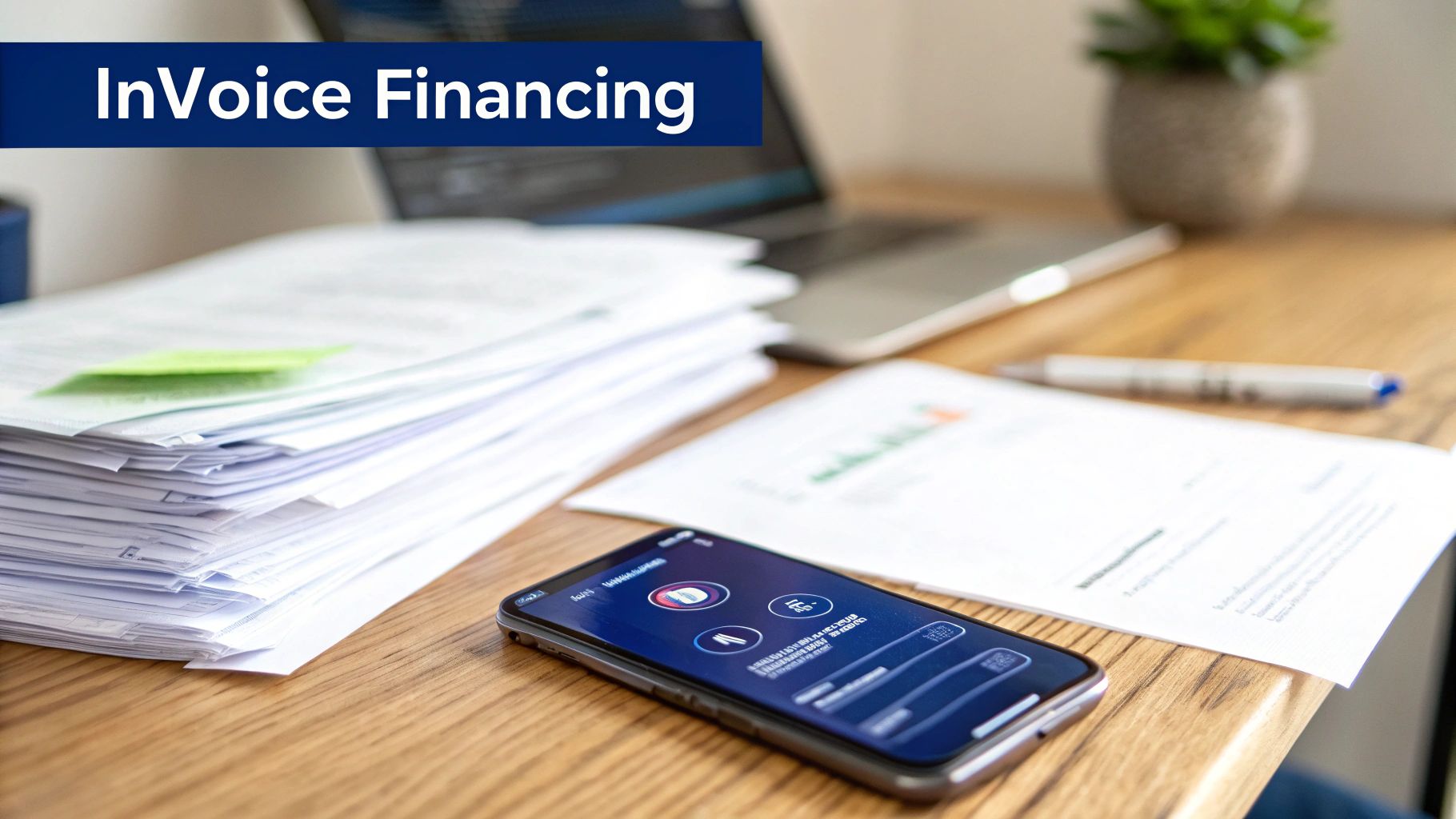
This process, also known as invoice factoring or discounting, typically provides you with up to 85% of the invoice value upfront. The lender then collects the full payment from your customer, and once settled, you receive the remaining balance minus the lender’s service fee. It is a powerful tool for maintaining consistent operational capital, especially during periods of rapid growth.
Who is Invoice and Receivables Financing Best For?
This type of financing is ideal for B2B companies with reliable clients but lengthy payment cycles. For example, a commercial cleaning service that has completed a $20,000 job can factor the invoice to immediately fund payroll and purchase supplies, rather than waiting 60 days. It's also invaluable for trade contractors managing multiple projects, wholesale distributors, and consulting firms needing consistent cash flow to cover overheads.
Key Considerations for Applicants
Before engaging a financier, ensure your internal processes and customer relationships are strong. A smooth transaction relies on clear communication and solid invoicing practices.
- Fee Structure: Understand the fees, which are typically a percentage of the invoice value. Evaluate this cost against the immediate benefit of improved working capital.
- Recourse vs. Non-Recourse: A recourse agreement means you are liable if your customer fails to pay. Non-recourse factoring transfers this credit risk to the lender for a higher fee, offering greater protection.
- Customer Relations: Choose a financing partner who handles collections professionally to maintain your positive relationship with clients.
- Selective Factoring: You don't always have to finance every invoice. Use this tool strategically for larger invoices or during cash-strapped periods to manage costs effectively.
Diamond Lending Insight: The quality of your debtors' ledger is more important than your own credit history. Lenders assess the creditworthiness of your customers, making this an accessible option even for businesses with less-than-perfect credit or limited trading history.
At Diamond Lending, we can connect you with factoring specialists experienced in your industry. Contact our team to explore how invoice financing can stabilise your cash flow and fuel your business's growth.
10. Private Lending and Credit-Impaired Business Loans
Private lending offers a crucial pathway to finance for businesses that don't fit the strict criteria of traditional banks. This option involves non-bank institutions and private investors providing capital to businesses with credit impairments, complex income structures, or urgent funding needs. It's a vital solution among the different types of loans for business for those who have been declined elsewhere.
Unlike major banks that rely heavily on credit scores and historical financials, private lenders take a more holistic view. They often prioritise the value of the security offered (such as real estate) and the future potential of the business over past credit issues. This asset-focused approach allows them to offer fast, flexible funding solutions, though typically at higher interest rates than standard bank loans.
Who Are Private Lending and Credit-Impaired Business Loans Best For?
This type of loan is a lifeline for viable businesses facing temporary setbacks or unique circumstances. For example, a construction company with a past credit default might secure a private loan against a development site to start a new project. Similarly, a self-employed consultant with an irregular income pattern could use private lending as bridge finance while they organise their financials for a future bank application.
Key Considerations for Applicants
While private lending provides access to capital, it's essential to approach it with a clear strategy and understanding of the terms.
- Exit Strategy: Have a clear plan for how you will repay the loan. This is often by refinancing to a traditional lender once your credit or financial position has improved, or through the sale of an asset.
- Security is Paramount: Be prepared to offer strong collateral, usually property. The loan-to-value ratio (LVR) offered will depend on the quality and location of the asset.
- Transparency: Be upfront about any credit issues. Lenders appreciate honesty and a well-documented explanation of what happened and the steps taken to rectify the situation.
- Cost Analysis: Understand that interest rates and fees will be higher than a standard bank loan. Ensure the potential return on your business investment justifies the higher cost of finance.
Diamond Lending Insight: Navigating the private lending market requires specialist expertise. Our brokers have strong relationships with a network of private lenders and understand their specific criteria. We specialise in presenting your application in the best possible light, focusing on your strengths to secure the funding you need to move forward.
At Diamond Lending, we believe past credit challenges shouldn't define your business's future. Contact our team of specialists to discuss how a tailored private lending solution can help you achieve your goals.
10-Point Comparison of Business Loan Types
| Product | Implementation complexity | Resource requirements | Time to access funds | Expected outcomes | Ideal use cases | Key advantages |
|---|---|---|---|---|---|---|
| Term Loans | Moderate — formal application, credit checks | Financial statements, identification, possible security/guarantee | Weeks | Lump-sum funding, predictable repayments, credit history building | Equipment purchase, inventory, operational capital | Predictable payments, competitive rates for established businesses |
| Low‑Doc / No‑Doc Loans | Low–Moderate — simplified verification, alternative assessments | Bank statements, tax summaries, minimal documentation | Days–2 weeks | Access for self‑employed/variable income, smaller loan sizes, higher cost | Freelancers, trades, contract workers with irregular income | Fast approval, reduced paperwork, accessible to underserved borrowers |
| Commercial / Business Line of Credit | Moderate — facility setup and monitoring | Strong credit profile, financials, sometimes security | Days (once approved) | Revolving borrowing, pay interest only on drawn amounts | Seasonal businesses, cash‑flow management, emergency funding | Flexible access, reusable facility, cost‑efficient interest on use |
| Construction & Development Loans | High — staged approvals, inspections, valuations | Detailed project plans, builder quotes, equity/deposit (15–25%) | Weeks to arrange; staged disbursements during build | Tranche funding, interest‑only during construction, conversion to mortgage | Developers, renovators, large builds | Funds released as needed, lowers interim borrowing cost, lender oversight |
| Asset Finance (Equipment & Vehicles) | Low–Moderate — secured to asset, term alignment | Asset quotes, ID, possible deposit, security over asset | Days–weeks | Acquire asset with predictable repayments, tax/timing benefits | Tradespersons, fleets, machinery and technology purchases | Preserves cash, competitive rates due to security, term matches asset life |
| Commercial Mortgages & Investment Property Loans | High — extensive underwriting, long‑term structuring | Significant deposit (20–30%), property valuation, rental income docs | Weeks–months | Long‑term financing, leverage property growth, tax benefits | Property investors, businesses buying premises, developers | Extended terms reduce payments, interest tax advantages, portfolio expansion |
| SBA / Microfinance (Aus) | Low — simpler underwriting, lender support | Business plan, startup costs, basic financials, personal statements | Days–weeks | Small‑scale capital, mentoring/support, platform to build credit | Startups, first‑time borrowers, underserved entrepreneurs | Accessibility, faster turnaround, mentoring and advice included |
| Refinance & Debt Consolidation | Moderate — assessment of existing facilities and costs | Existing loan docs, asset equity evidence, valuation/legal fees | Weeks | Lower monthly costs, single payment, possible equity release | Owners with multiple loans, property investors seeking equity | Simplifies cash flow, potential rate savings, access to equity |
| Invoice & Receivables Financing | Low–Moderate — facility linked to receivables, customer checks | Invoices, customer creditworthiness, ongoing admin | Days | Immediate working capital, improved cash flow, possible margin reduction | B2B service providers, contractors, exporters | Converts invoices to cash fast, scales with sales, lender handles collections |
| Private Lending / Credit‑Impaired Loans | Moderate — negotiated terms, alternative underwriting | Strong collateral, personal guarantees, explanation of credit history | Days–weeks | Access to capital despite poor credit, higher cost, shorter terms | Credit‑impaired borrowers, turnaround businesses, urgent bridge finance | Accessibility for rejected applicants, flexible underwriting, faster decisions |
Your Next Step: Partnering with a Finance Expert
Navigating the landscape of Australian business finance can feel like an overwhelming task. As we've explored, the sheer variety of funding solutions, from traditional term loans and versatile lines of credit to specialised construction finance and agile invoice financing, highlights a critical truth: there is no one-size-fits-all answer. Each of the different types of loans for business serves a unique purpose, designed to solve specific challenges and unlock distinct opportunities for growth, investment, or stability.
The key takeaway is that the "best" loan is not a static concept; it is entirely dependent on your business's current stage, financial health, asset position, and future objectives. A startup requiring capital for essential equipment will have vastly different needs than a seasoned developer embarking on a new commercial project, or a self-employed professional seeking a low-doc solution to manage cash flow. Choosing incorrectly can lead to cash flow strain, unnecessarily high costs, or restrictive terms that hinder your business's agility.
From Knowledge to Action: Building Your Finance Strategy
Understanding the options is the foundational first step, but transforming that knowledge into a successful funding outcome requires a strategic approach. It involves a deep analysis of your operational needs, a realistic assessment of your borrowing capacity, and a clear-eyed view of your long-term commercial goals. This is where the true value lies, moving beyond a simple list of products to building a coherent and sustainable finance strategy.
Consider these critical questions as you move forward:
- What is the core problem I need to solve? Are you managing a temporary cash flow gap, investing in a long-term growth asset, or restructuring existing debt to improve profitability? The purpose of the funds is the most important factor in determining the right loan structure.
- What is my timeline? Do you need capital urgently, like with a merchant cash advance to seize a stock opportunity, or are you planning a staged rollout for a construction project over several months or years?
- What documentation can I provide? Being honest about your financial records is crucial. If you have years of detailed financial statements, a traditional term loan might be suitable. If you're a newer business or self-employed with less traditional income proof, exploring low-doc or private lending options from the outset will save you significant time and effort.
- What is my tolerance for risk and cost? Are you comfortable with a variable interest rate tied to market fluctuations, or do you require the certainty of a fixed rate? Understanding the total cost of finance, including all fees and charges, is essential to making an informed decision.
Why Expert Guidance is Your Most Valuable Asset
While you are the expert on your business, a finance broker is an expert on the lending market. The complexities of lender policies, credit appetites, and application requirements are constantly changing. Attempting to navigate this maze alone can be a drain on your most valuable resource: your time. Moreover, a rejected application can leave a mark on your credit file, making subsequent attempts more difficult.
Partnering with a specialist broker like Diamond Lending shifts the dynamic. Instead of you chasing lenders, we bring the right lenders to you. We translate your business needs into the language lenders understand, packaging your application to highlight its strengths and align with specific policy niches. We act as your advocate, negotiating terms and ensuring you secure a facility that not only meets your immediate needs but also supports your long-term vision. This strategic partnership is the bridge between knowing about the different types of loans for business and successfully securing the one that will propel you forward.
Ready to turn financial complexity into clarity and opportunity? The team at Diamond Lending specialises in matching Australian businesses with the ideal funding solutions from our extensive panel of lenders. Schedule a no-obligation strategy call today to get expert guidance on the different types of loans for business and find the perfect fit for your goals.